

Annotation 1
The starting point
What the business needed from its website and which problems needed attention.
We are a data-driven SEO agency focused on traditional and AI-powered search.
Give potential customers a clear view of your services, reasons to trust your business, and an easy way to get in touch.
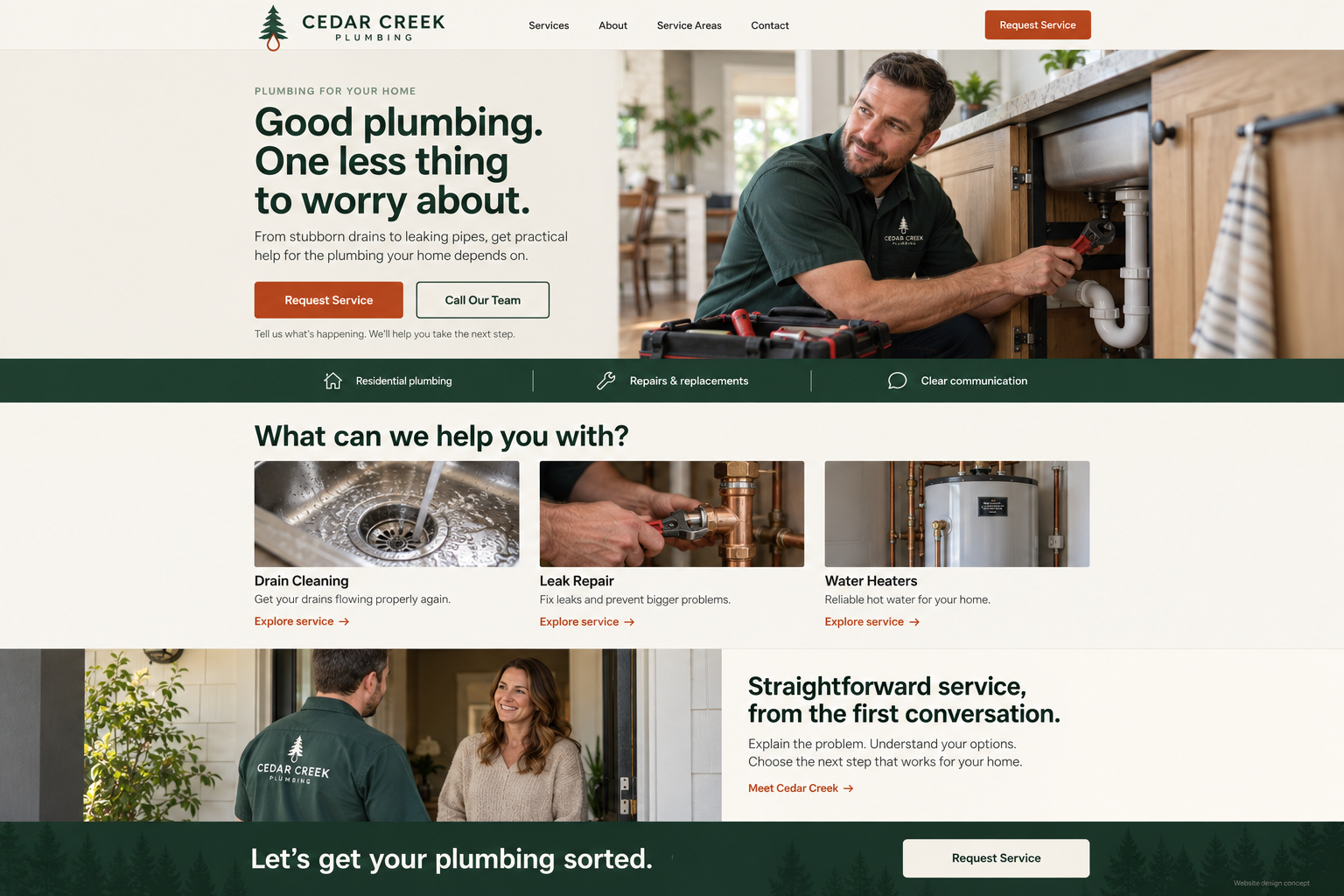
At Local Web Rankers, we design and develop plumbing websites that help visitors find what they need and decide whether you’re the right plumber for the job. Whether you need a new website or a redesign, we focus on clear service pages, professional presentation, and a smooth experience on phones and desktops.
Explore how a plumbing website can guide customers from finding the right service to making an inquiry. Desktop and mobile views help you assess the layout, readability, and ease of getting in touch.
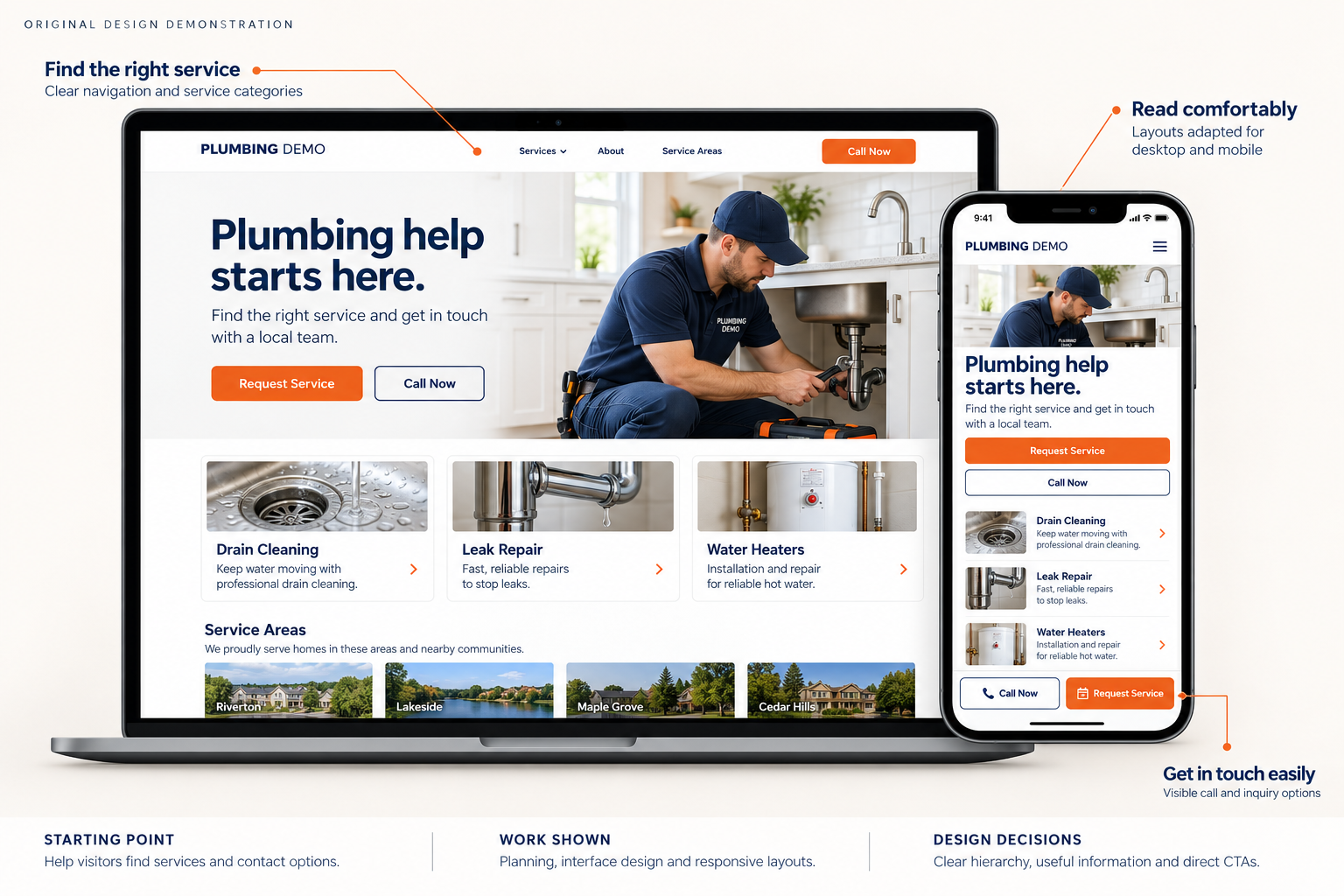
Alongside the design, look for a clear explanation of:
What the business needed from its website and which problems needed attention.
Which parts of the planning, design, and development we handled.
How service navigation, business information, and contact options help visitors take the next step.
This gives you a practical way to evaluate the work and discuss what would suit your own plumbing business.
Give customers the information they need to decide whether you can help, then make contacting your business straightforward.
We organize your website around your actual services and customer needs, whether someone is dealing with an urgent repair, planning a replacement, or arranging commercial work.
Clear navigation and relevant service links help visitors reach the right information quickly. Each page explains the work you offer in language customers can understand, with a layout that is easy to follow on phones and desktops.
Accurate service details, coverage information, and availability help customers assess whether your business fits their needs. Practical explanations of what to expect can also help them make a more informed inquiry.
Genuine project photos, customer reviews, and relevant credentials give visitors useful reasons to consider your business. We place verified information where it supports their decision, using the material you can provide.
We make the agreed contact options easy to find and use, with clear instructions and forms that request relevant details.
The experience reflects how your business handles inquiries. If a customer submits an appointment request, the confirmation explains what happens next and whether the booking still needs to be confirmed.
We bring the pages, design, and functionality together around your services and the way you handle inquiries. Your proposal defines what is included, what you need to provide, and which additional features require separate work.
We plan the pages your business needs, including relevant service pages, company information, genuine proof of your work, and contact details.
We also agree who will write, supply, review, and approve the content. Existing photos, branding, and useful website material can be assessed for reuse.
We apply your branding to clear, reusable layouts that work on phones and desktops. Readable text, understandable navigation, and clearly labeled controls help customers use the site comfortably.
The layouts also give future pages a consistent starting point as your business grows.
We develop the agreed editing tools, forms, and contact features. Forms include relevant fields, clear feedback, and delivery to the intended destination.
Any booking, customer-management, review-display, or other integration is checked for suitability and defined in the project scope before it is included.
We organize page addresses, headings, metadata, and images, alongside the agreed search settings and tracking setup.
Before launch, we check the layouts, navigation, links, forms, and included integrations. These checks help confirm that customers can use the website and that inquiries reach the right place.
Ongoing Organic SEO, Local SEO, and AI SEO are scoped separately from the website build.
Improve the experience for your customers while carrying forward the useful parts of your existing website. We plan the change around your content, important pages, and the systems your business relies on.
We assess your current website before recommending focused improvements, a redesign, or a rebuild.
The recommendation considers its structure, usability, editing options, and functionality, so you understand what needs changing and why.
We review existing service information, photos, and other assets to identify what should be kept, updated, or replaced.
Where page addresses need to change, we map the old pages to relevant destinations and check the redirects. This helps customers following existing links reach the information they need.
We identify the access, hosting arrangements, and business-email dependencies involved in the change. A new design does not automatically require a new domain.
The launch plan includes backups, a recovery approach, testing, and your approval before the replacement website goes live.
We check important pages, navigation, redirects, forms, and included integrations on the live website. These checks help identify issues that could interrupt a customer’s visit or prevent an inquiry from reaching your business.
Your website should be straightforward to use and maintain after the build is finished. We make ownership, access, editing options, and support responsibilities clear before work begins.
Your project terms explain what belongs to your business, which accounts you can access, and which tools or assets have separate licenses.
This covers the relevant domain and hosting arrangements, website files, content, media, and editing permissions, so you understand what the handover includes.
We identify the parts of the website you can edit and any changes that need development support.
Your handover sets out the access provided, along with any agreed documentation or training. This helps you plan everyday updates, such as changing service information or adding new photos.
We distinguish corrections to the agreed build from later content edits, additional features, and ongoing maintenance.
Hosting, backups, software updates, license renewals, and support are identified as included, optional, or handled by another provider. You know who is responsible and which costs continue after launch.
We explain what can be transferred or exported, how access is handed over, and any platform or licensing limitations.
That gives you a clear basis for deciding how your website will be managed as your business grows.
You get a clear sequence of decisions, reviews, and approvals, so you know what is happening, what we need from you, and when you can review the work.
We review your existing website, if you have one, alongside your services, available content, branding, and required functionality. This helps us recommend an approach that fits your business.
We define the pages, content responsibilities, features, and project stages before development begins.
The quote reflects the design requirements, content volume, integrations, and any migration work. Project fees and ongoing costs are identified separately. The schedule accounts for access, content preparation, feedback, and other dependencies.
You review the proposed layouts and how key information will be presented. We agree on revisions and approvals at defined stages, giving you an opportunity to shape the website before development progresses.
We develop the approved design and check the agreed pages and functionality.
Testing covers relevant screen sizes, navigation, links, form labels and error messages, inquiry delivery, included integrations, and tracking where specified. We address issues identified against the project requirements before requesting launch approval.
Once you approve the website for launch, we carry out the planned transition and check key functions on the live site.
We then complete the agreed handover, including access, documentation, and a clear record of any remaining items or follow-up responsibilities.
We review your website’s structure, usability, editing options, and functionality before recommending an approach. Focused improvements may be enough. A rebuild may make sense when the existing platform or structure prevents the changes your business needs. We explain the recommendation before defining the project.
A new website does not automatically require a new domain or email address. We review your domain access, hosting, and email setup before planning the transition. Any necessary changes and dependencies are identified so the website launch can be coordinated with the services your business uses.
Content responsibilities are defined in your proposal. We assess existing copy, photos, and branding for reuse, then identify what needs updating or creating. You provide verified business details and approve the content. Any writing, editing, or new imagery included in our work is specified before the project begins.
We define your functionality and editing needs before confirming the platform. The proposal identifies what your team will be able to update, what requires development support, and what documentation or training is included. Platform costs and relevant limitations are also explained.
We review the tools you use and the available integration options before including them in scope. The project specifies how information should move between systems, what customers will see, and any additional costs. An appointment-request form and a system that confirms available bookings are treated as different requirements.
The main factors are the page types, content volume, design requirements, functionality, integrations, and migration work. Timing also depends on access, content preparation, and feedback. Your proposal sets out the project price, schedule, responsibilities, and any ongoing or third-party charges.
The build includes the search foundations specified in your proposal, such as appropriate page structure, headings, metadata, and access settings. Ongoing Organic SEO, Local SEO, and AI SEO are separate scopes. We identify how the website project fits with any search work you already have underway.
Your project terms distinguish launch corrections, ongoing maintenance, and additional development. New pages or features can be scoped separately. We also explain what files, content, and access can be transferred, along with any platform or licensing limitations, before work begins.
Tell us whether you need a new website or a redesign, which plumbing services you want to highlight, and what customers should be able to do on the site. Share your current website, if you have one, along with any features and timing you have in mind.
Get a clear proposal covering the recommended pages, functionality, responsibilities, project stages, and price, including any ongoing costs. You’ll know what you’re getting before deciding how to move forward.